[REVIEW] Telestar STARSAT LX
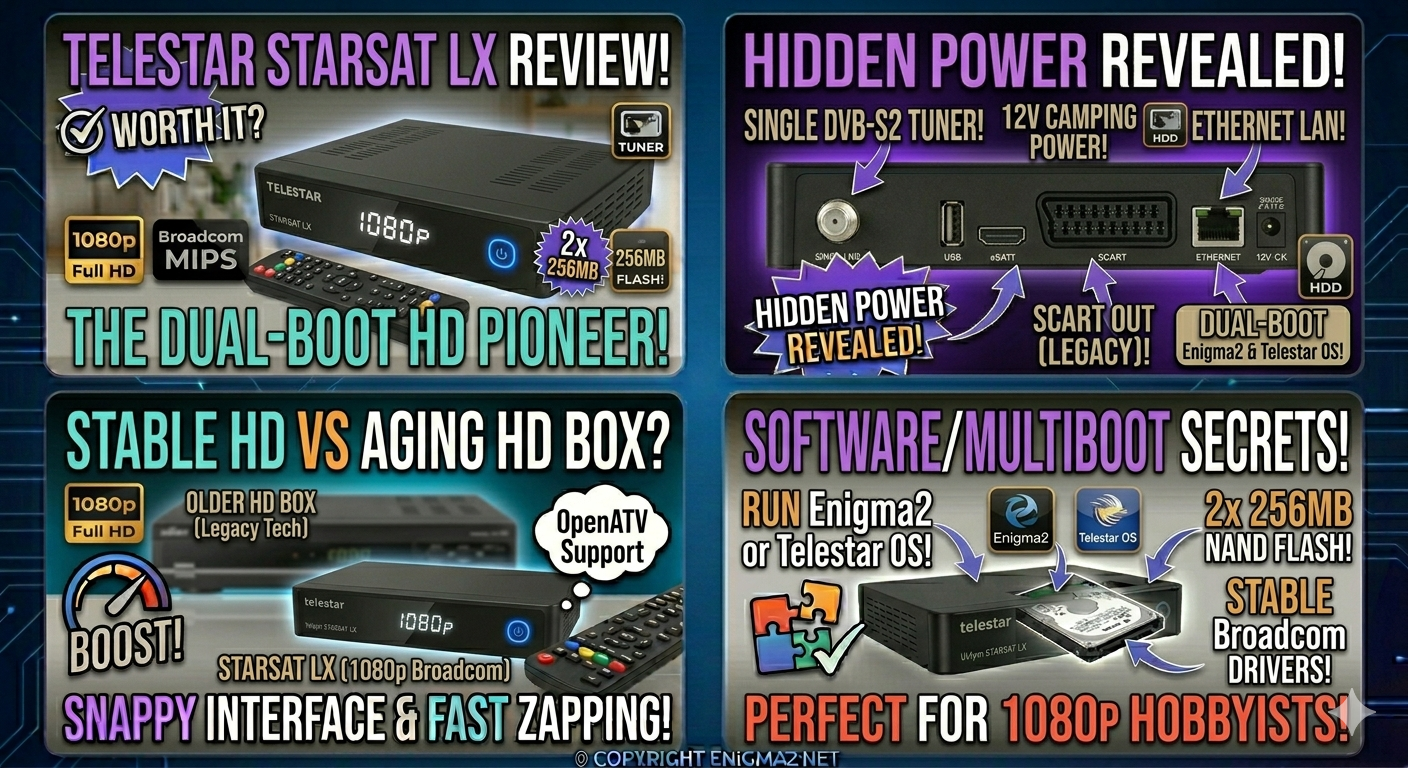
The Telestar STARSAT LX occupies a unique spot in history as the first-ever Linux-based HDTV receiver from Telestar. For the veterans on enigma2.net, this box is remembered for its “split personality”—it was a pioneer of the dual-boot system long before it became a standard feature in 4K boxes.
Here is the “human” breakdown of this German-engineered classic.
## 1. The Dual-Boot Pioneer
The STARSAT LX was famous for giving users two completely different ways to watch TV out of the box:
-
OS 1 (The “Safe” Mode): A proprietary, user-friendly firmware that included a full Opera-based web browser. It was rock-solid for casual family viewing and HbbTV content.
-
Enigma2 Mode: This is where the magic happened for our community. It was fully compatible with OpenATV, which even built a specialized image just for this hardware.
Switching between them meant you could have a “working” family box by day and a “tinkering” hobbyist box by night.
## 2. Under the Hood: Broadcom Reliability
In an era where many budget boxes were using generic chips, Telestar went with the Broadcom BCM7358.
-
The Specs: It put out 750 DMIPS with 512MB of DDR RAM.
-
The Feel: While those numbers look tiny by 2026 standards, the Broadcom architecture meant the drivers were incredibly stable. It handled 1080p video with that signature “smooth” Broadcom motion that MIPS purists still swear by.
-
Flash Memory: It featured 2x 256MB NAND Flash, specifically designed to keep the two operating systems separate and safe from each other.
## 3. Built for the Living Room (and the Campsite)
The STARSAT LX was a surprisingly versatile piece of hardware:
-
Compact Design: It wasn’t a giant rack-mounted unit. It was sleek and professional, fitting easily into smaller setups.
-
12V Power: Because it ran on 12V, it became a massive hit with the camping and caravan community. You could take a “pro” Enigma2 setup on the road and run it off a battery.
-
Web Ready: It was one of the early boxes to really push the “smart” side, supporting USB keyboards and mice for its built-in browser.
## 4. Connectivity
Despite its size, it didn’t skimp on the essentials:
-
USB PVR: One front-facing USB port made it easy to plug in a thumb drive for quick recordings.
-
Ethernet: A stable RJ45 port for IPTV and streaming your local library.
-
Legacy Support: It included both HDMI and a Scart output, making it a lifesaver for people still using high-quality older TVs.
## Pros and Cons
| What I Loved | The Reality Check |
| Dual-Boot Stability: Best implementation of two OSs at the time. | Single Tuner: You can’t record one channel and watch another. |
| Broadcom Drivers: Very few crashes; OpenATV support was excellent. | 1080p Limit: No 4K support; strictly a Full HD machine. |
| HbbTV Support: Great for interactive European TV services. | Front USB: A bit messy if you want a permanent hard drive attached. |
### The Verdict
The Telestar STARSAT LX is a bit of a cult classic. It isn’t a 4K powerhouse, but it represents a time when German engineering met the open-source world and actually got it right. If you find one today, it’s still a fantastic, stable box for a bedroom, a kitchen, or a holiday home.