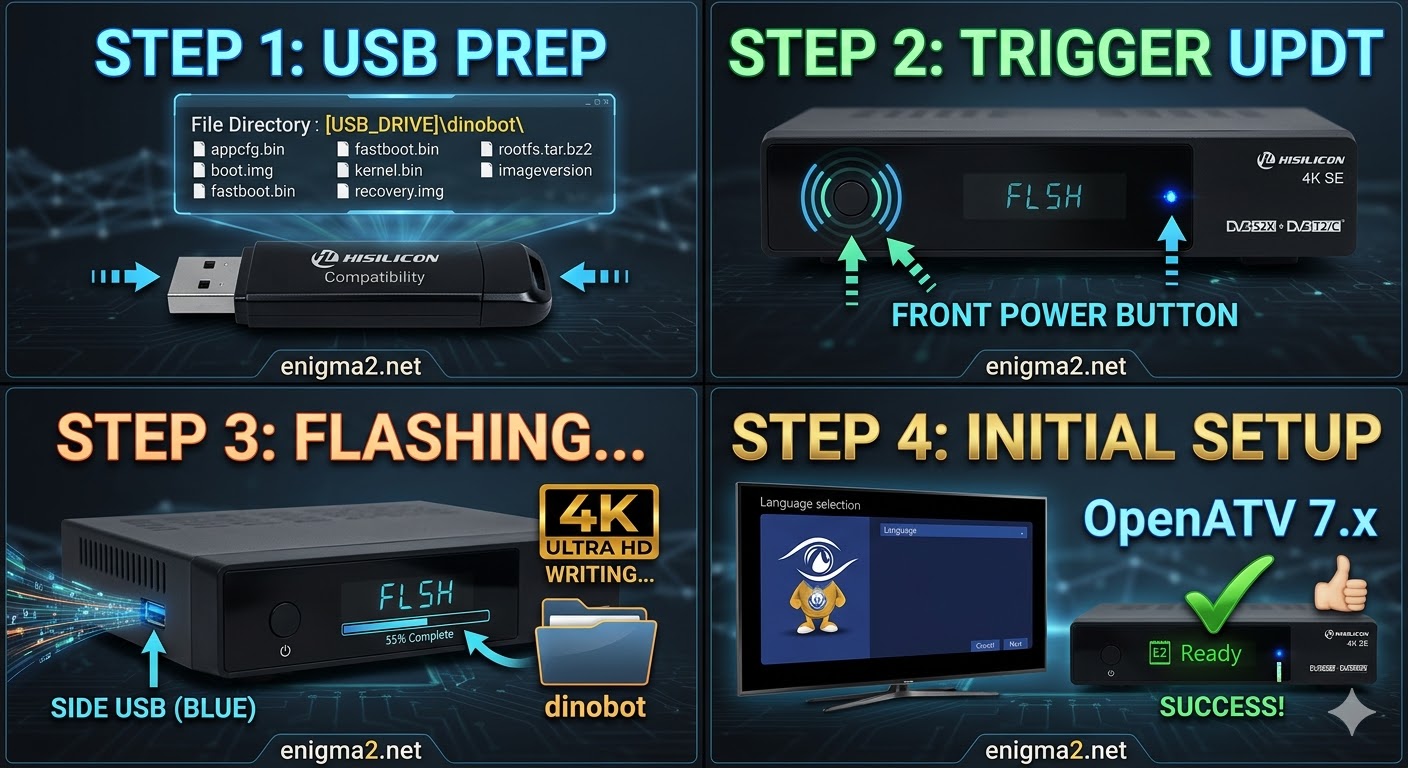
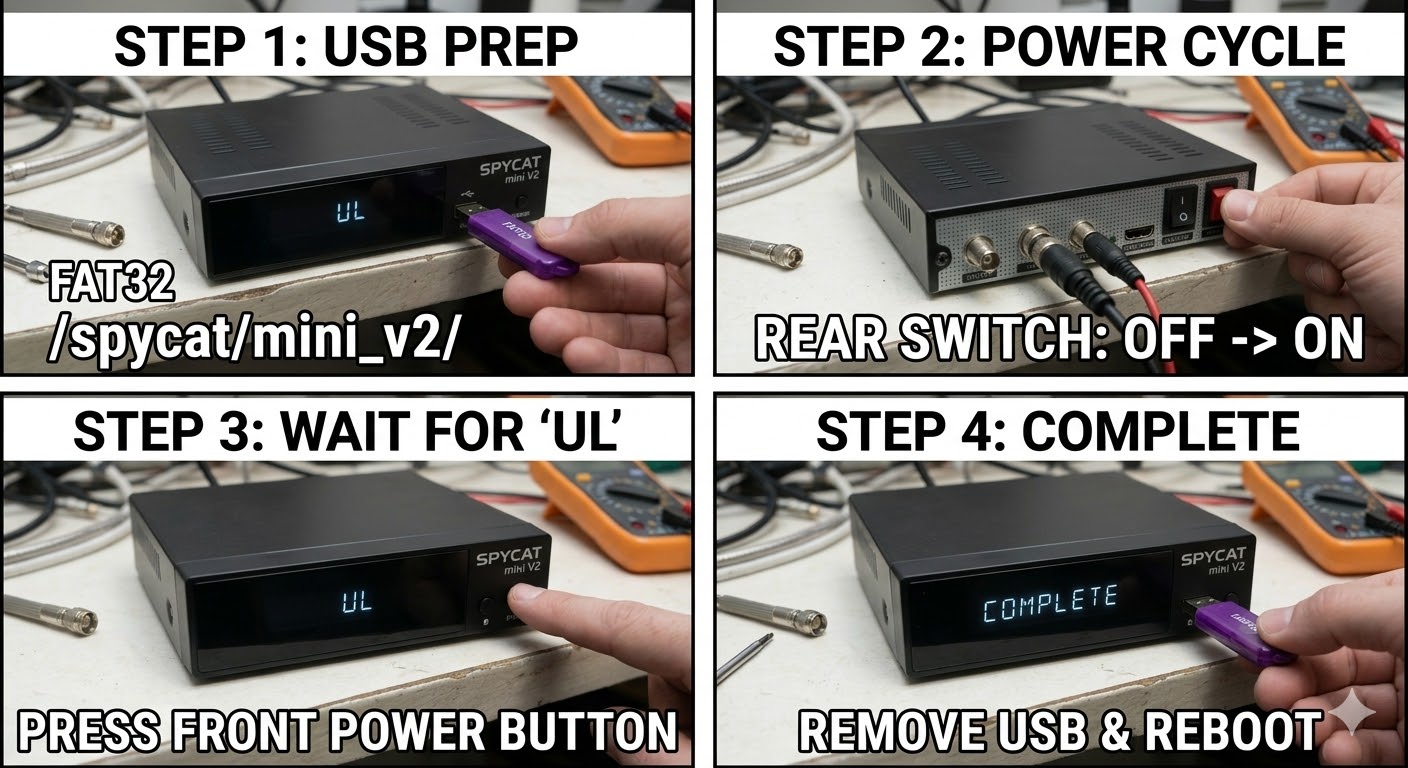
[HOW TO FLASH] how to flash SPYCAT mini V2
The SPYCAT Mini V2 (including the Twin/DVB-S2 models) uses a Hisilicon processor, which makes the flashing process slightly different from the Broadcom-based Technomate models we’ve been looking at. Most notably, the “trigger” for the flash usually happens via your remote control or on-screen prompt.
Preparation
-
USB Drive: Use a FAT32 formatted USB stick. As with most receivers, an older USB 2.0 drive (8GB or smaller) is highly recommended to ensure the bootloader recognizes it.
-
The Files: Extract your image zip file (e.g., OpenATV, OpenViX). You should see a folder named
spycat. -
Root Path: Copy the entire
spycatfolder to the root of your USB drive.-
Structure:
USB Root > spycat > mini > (files: kernel.bin, rootfs.bin, etc.) -
Note: Ensure the folder structure is exactly
spycat/mini.
-
Flashing Steps
-
Power Down: Turn off the receiver using the physical power switch at the back.
-
Clear Ports: Ensure no other USB devices are plugged into the receiver.
-
Insert USB: Plug the USB stick into the rear USB port for the most stable connection during boot.
-
Power On: Flip the rear power switch to ON.
-
The Trigger (Important):
-
Unlike the Technomate, the Spycat Mini V2 will usually show a prompt on your TV screen.
-
When you see the prompt on the screen, press and hold the OK button on your REMOTE CONTROL to start the flashing process.
-
-
Flashing Process: You should see the progress displayed on your TV screen. This takes roughly 2 to 4 minutes. Do not turn off the power until it is complete.
-
Completion: The receiver will automatically reboot once the flash is successful.
-
Finalize: Once you see the new boot logo on your TV, remove the USB stick.
Quick Troubleshooting
-
No Prompt on TV: If the box boots straight to the old image, the USB stick is likely not being read. Try a different USB port or, more importantly, a different (older) USB stick.
-
Remote not responding: Ensure you are pointing the remote directly at the receiver and holding the OK button immediately when the prompt appears.

The flashing process should take approximately two to four minutes to complete, while the receiver
is being flashed it is vitally important that you DO NOT power the receiver down for any reason as
this can cause serious and or permanent damage.